
113 white pill identification guide: what it is, risks, and what to do
Table of Contents
- Introduction: why the 113 white pill matters
- What is the 113 white pill?
- How to identify the 113 white pill (visual cues and tools)
- Common medications and products with imprint "113 white pill"
- Typical uses and active ingredients
- Safety, side effects, and drug interactions
- If you find an unknown 113 white pill: step-by-step actions
- Testing and verification: pill checkers, labs, and pharmacies
- Legal, regulatory, and disposal considerations
- Frequently asked questions about the 113 white pill
Introduction: why the 113 white pill matters
When someone mentions a "113 white pill," they are usually referring to a white tablet marked with the imprint "113." Pills are commonly identified by shape, color, score lines, and imprints; that imprint is critical for distinguishing one medicine from another. For patients, caregivers, and safety-conscious folks, knowing how to identify an unknown tablet can prevent medication errors, adverse reactions, and accidental poisonings. This article explains what the 113 white pill might be, how to verify it, safety concerns, and practical next steps without replacing professional medical advice.
For patients managing hypertension or fluid retention, having uninterrupted access to medication is essential. Online ordering provides a practical solution for those with busy schedules. Many individuals prefer to buy hydrochlorothiazide without prescription online because it offers a convenient way to obtain a commonly prescribed diuretic while avoiding unnecessary trips to local pharmacies.
What is the 113 white pill?
"113 white pill" is not a single standardized product name. It’s a descriptive phrase used when someone finds a white tablet with the imprint 113. Multiple manufacturers and formulations can use similar imprints, meaning the same imprint might correspond to different active ingredients depending on manufacturer, strength, or region. Because of that variability, identification must combine imprint with pill shape, size, and packaging information. In many cases, 113 imprints belong to generic prescription tablets or over-the-counter products, but illicit or counterfeit pills can mimic legitimate markings, creating risk.
How to identify the 113 white pill (visual cues and tools)
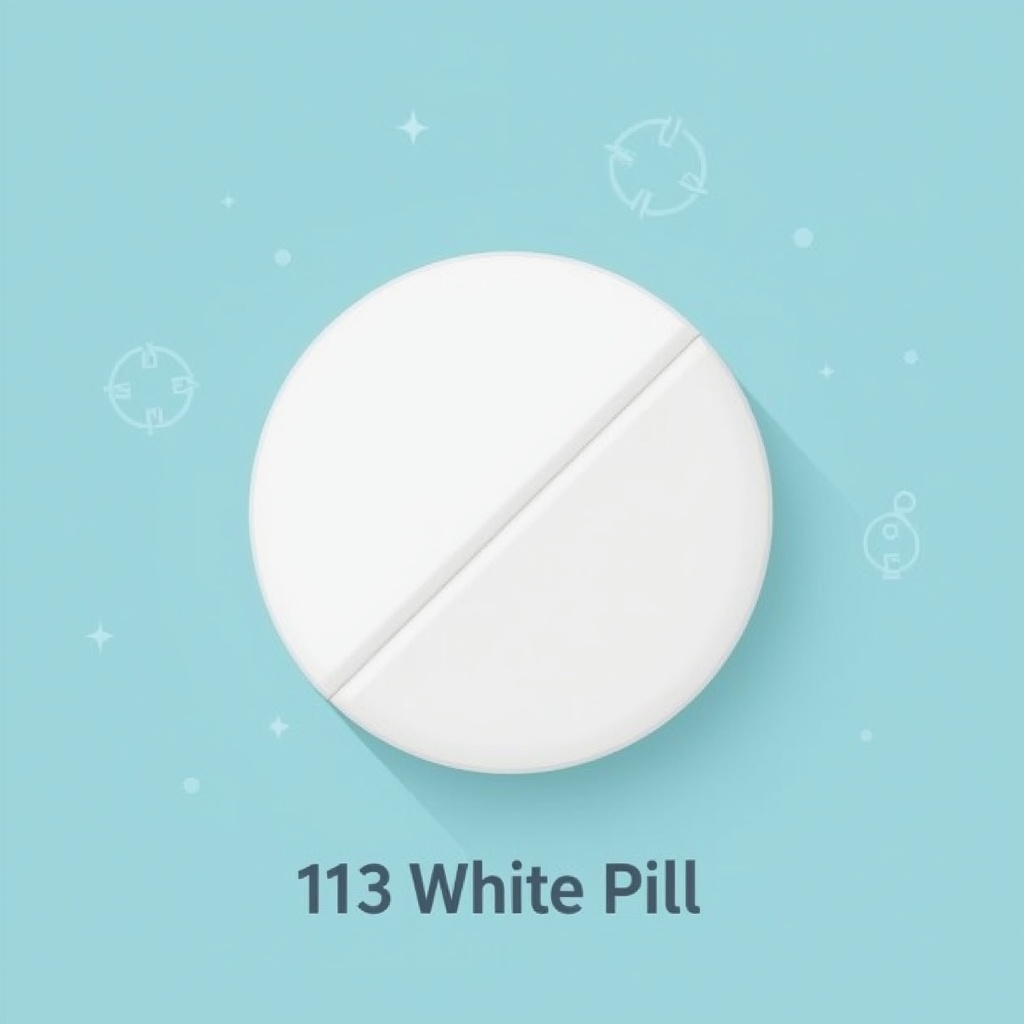
Start by noting every physical characteristic. Photograph the pill, measure it against a ruler, and record shape (round, oval, oblong), score marks, and any color nuances. Use reputable online pill identifier tools maintained by pharmacies or health organizations; these let you input imprint, color, and shape to narrow options. Keep in mind some identifiers are region-specific and may not list counterfeit drugs. Always pair tool results with professional verification from a pharmacist or local poison control center.
Common medications and products with imprint "113 white pill"
There’s no single database entry exclusively for “113 white pill” that applies globally. However, several legitimate medications have imprints similar to "113." These can include generics of cardiovascular drugs, antidepressants, or even simple tablets like vitamins when produced by different manufacturers. Below is a sample comparison table to illustrate how the same imprint can correspond to different drugs or strengths depending on manufacturer.
| Imprint | Possible Active Ingredient(s) | Typical Use | Notes |
|---|---|---|---|
| 113 (round, white) | Generic formulation (may vary) | Could be cardiovascular, analgesic, or other | Manufacturer and strength determine identity |
| 113 / scored | Modified dose of prescription drug | Prescription treatment | Scored tablets are meant to be split per instructions |
| 113 / oval | Over-the-counter or supplement | Vitamins, minerals, OTC analgesics | Packaging and labeling essential for confirmation |
Typical uses and active ingredients
Because "113 white pill" is an imprint descriptor rather than a brand, active ingredients vary. Common categories associated with ambiguous imprints include:
- Cardiovascular agents (blood pressure, cholesterol meds)
- Analgesics or anti-inflammatory pills
- Psychotropic drugs (antidepressants or anxiolytics) in generic forms
- Vitamins or mineral supplements in generic packaging
Always confirm an unknown pill’s active ingredient before ingesting. Packaging, prescription bottles, or pharmacy records provide the best evidence. If that’s not available, proceed to professional verification.
Safety, side effects, and drug interactions
Pills with identical imprints can produce entirely different side-effect profiles depending on active ingredient and dose. For example, a cardiovascular drug could cause dizziness or low blood pressure, while a pain medication might cause drowsiness, stomach upset, or liver risk in high doses. Drug interactions are another major concern: mixing medications with alcohol, certain supplements, or prescription drugs can amplify adverse effects or reduce efficacy.
| Risk | Why it matters with unknown 113 white pill |
|---|---|
| Allergic reaction | Unknown ingredients increase the chance of unexpected allergies |
| Wrong dosage | Taking a stronger pill than intended can cause overdose |
| Drug interactions | Unknown composition prevents safe interaction checks |
If you find an unknown 113 white pill: step-by-step actions
Finding an unlabelled tablet can be alarming. Follow these practical steps to reduce risk and identify the pill safely.
- Do not taste or ingest the pill.
- Place the pill in a sealed container or bag to preserve evidence.
- Photograph the pill with a scale or ruler for size reference.
- Use a reliable online pill identifier as an initial check.
- Call your pharmacist or local poison control center for professional guidance.
- If exposure or ingestion has occurred, seek emergency care or call 1-800-222-1222 (U.S. Poison Control).
These steps prioritize safety and documentation, which helps health professionals evaluate the risk and recommend next steps.
Testing and verification: pill checkers, labs, and pharmacies
Pharmacies are often the most accessible first line of verification. Pharmacists can match imprints and packaging, provide likely identities, and advise on safety. For legal or forensic-level certainty, specialized pill testing or laboratory analysis may be required—especially when counterfeit or illicit substances are suspected. Drug-checking services and forensic labs can perform mass spectrometry or chromatographic analysis to identify active compounds, but these services vary by region and may require fees.
Legal, regulatory, and disposal considerations
Prescription medication with identifying imprints is regulated; possession of controlled substances without prescription can have legal implications. If you discover controlled pills, contact local law enforcement or a pharmacist for proper handling instructions—especially if children or pets are at risk. For disposal, many communities have drug take-back programs or designated collection points at pharmacies. If those aren’t available, follow FDA guidance: mix medicines (do not crush) with an unappealing substance, place in a sealed container, and discard in household trash; remove personal information from containers before recycling.
Frequently asked questions about the 113 white pill
Q: Can I rely on an online pill identifier alone? A: No. Online tools are helpful but not definitive. Confirm with a pharmacist or lab when safety is at stake.
Q: What if a child swallows an unknown 113 white pill? A: Treat it as a potential emergency. Call poison control at 1-800-222-1222 (U.S.) or your local emergency services immediately and follow their instructions.
Q: How often do counterfeit pills share imprints like 113? A: Increasingly often. Counterfeiters can copy legitimate imprints to disguise illegal or dangerous compositions. That’s why physical appearance is not a guarantee of safety.
Q: Are there mobile apps that can identify pills reliably? A: There are reputable pharmacy-backed apps and websites that help with identification. Always cross-check results and consult a pharmacist for medical decisions.
Additional resources and next steps
When in doubt, prioritize human experts: local pharmacists, healthcare providers, and poison control centers. Keep an up-to-date medication list for everyone in your household and store pills in original containers with labels. Encourage safe medication habits—secure storage and proper disposal—to reduce accidental exposures and maintain household safety.
FAQ
What does a white pill stamped with 113 likely represent?
A white tablet with the imprint 113 can correspond to different manufacturers or strengths, so it cannot be identified reliably by imprint alone; use an accredited pill identifier, check the original packaging or prescription, or ask a pharmacist for authoritative identification.
How can I safely identify a pill marked 113?
Compare size, shape, score marks, color shade and full imprint using reputable resources (FDA database, pharmacy pill identifier tools, or a pharmacist). Never rely solely on internet images; bring the pill to a pharmacist or physician for confirmation.
What information does the imprint 113 usually convey?
An imprint like 113 generally helps manufacturers and regulators distinguish product, strength, and manufacturer, but identical numeric imprints can be reused across different makers or formulations, so context (packaging, prescription label) is crucial.
Is it possible that a white pill 113 is a controlled substance?
Yes, some controlled substances use numeric imprints, but a specific imprint doesn’t automatically indicate whether a pill is controlled or not; always verify with a professional and do not assume legality or potency based on imprint alone.
What should I do if I found an unmarked white pill with 113 at my home?
Do not ingest it. Place it in a sealed container and take it to a local pharmacy, physician, or community drug take-back program for identification and safe disposal. If you suspect it might have been taken by a child or pet, contact poison control immediately.
Can the same imprint 113 correspond to generic and brand-name drugs?
Yes. Both generic and brand medications can carry the same or similar numerical imprints; differences are more reliably identified through manufacturer codes, packaging, and verified databases rather than imprint numbers alone.
How can counterfeit pills be distinguished from legitimate pills with imprint 113?
Look for inconsistencies in color, font, size, coating, or packaging. Counterfeits may have blurry imprints, off-center logos, or incorrect batch/lot numbers. If in doubt, verify with the pharmacy where it was dispensed or with regulatory agencies; do not assume a pill is authentic just because it looks similar.
What are common risks associated with taking a pill whose identity I’m unsure about?
Risks include allergic reactions, dangerous drug interactions, overdose, therapeutic failure, and exposure to counterfeit or contaminated products. If uncertain, seek professional guidance before taking any unidentified medication.
Can I use online pill images to confirm a pill marked 113?
Online images can give clues but are not definitive due to photo variations, counterfeit listings, and overlapping imprints. Use reputable pill identification tools and confirm findings with a pharmacist or prescriber.
Are there legal implications to possessing pills with imprint 113 without a prescription?
Potentially—if the pill is a prescription-only or controlled substance, possession without a valid prescription could lead to legal consequences. Laws vary by jurisdiction; consult local regulations and dispose of unknown pills properly.
What are the most reliable resources for pill identification including imprint 113?
Trusted sources include the FDA’s drug databases, professional pharmacy databases (Lexicomp, Micromedex), pharmacy staff, and Poison Control centers; avoid relying solely on unverified forums or social media.
Can pill shape and size help distinguish different 113 pills?
Yes. Shape (round, oval, capsule-shaped), dimensions, and presence/absence of scoring can help narrow possibilities, but they should be used alongside imprint, packaging, and professional checks.
If a healthcare provider prescribes a medication but my pills are stamped 113, what should I do?
Compare the pill to the prescription label; if the imprint, strength, or appearance doesn’t match the description on the label or what your provider stated, contact your pharmacy or prescriber immediately before taking the medication.
Are there common side effects associated with pills that might bear the imprint 113?
Side effects depend wholly on the active ingredient and dose, not the imprint number. Once a pill is positively identified, consult the prescribing information or pharmacist for the specific side effect profile.
How should I store pills like a 113 white tablet to keep them safe and effective?
Store in the original labeled container at recommended conditions (usually cool, dry place away from sunlight), keep out of reach of children and pets, and follow any refrigeration or light-sensitivity guidance on the packaging.
What steps should I take if I accidentally took a pill with imprint 113 and feel unwell?
If symptoms are severe (difficulty breathing, loss of consciousness, severe allergic reaction), call emergency services. For nonlife-threatening concerns, contact Poison Control or your healthcare provider and have the pill or packaging available for identification.
How can pharmacies help with identifying a pill marked 113?
Pharmacists can use their professional databases and experience to identify pills by imprint, shape, and size; they can also check dispensing records to see if the pill matches a prescription filled by their pharmacy.
Is it safe to crush or split a white pill with imprint 113 to alter the dose?
Only alter a pill’s form (splitting/crushing) if instructed by a healthcare provider or if the medication is labeled as safe to divide; many tablets have special coatings or extended-release formulations that should not be crushed.
What should parents know about children and pills with imprint 113?
Keep all medications locked up and out of sight. Teach children that medication is not candy. If a child ingests an unknown pill, call Poison Control immediately and bring the pill packaging to the emergency department if possible.
Can I travel with pills stamped 113 across state or international borders?
Carry medications in their original containers with the prescription label. Check airline and destination country regulations for specific controlled substances, quantities allowed, and documentation required.
How often do imprint numbers like 113 get reused by manufacturers?
Imprint reuse can happen over time or across different manufacturers, especially for generic products; hence, imprint alone is insufficient for definitive identification.
How does packaging help confirm a pill with imprint 113?
Packaging contains manufacturer, lot number, expiration date, NDC code, and exact drug name/strength—these details provide authoritative confirmation and should be retained whenever possible.
How should I dispose of leftover or unknown pills including those stamped 113?
Prefer community drug take-back programs. If unavailable, follow FDA guidelines for safe household disposal—mixing with undesirable materials in a sealed container before placing in trash—or check local regulations for disposal.
What testing options exist for verifying a pill identified as 113?
Laboratory chemical analysis (e.g., mass spectrometry) performed by accredited labs or law enforcement can definitively identify active ingredients, but this is typically not necessary for routine medical queries and may involve cost and logistics.
Does pill color variation affect identification of 113 white tablets?
Color shade can vary due to manufacturing batches or light exposure; while useful, color alone is unreliable and should be combined with imprint, size, and professional databases.
What is the best immediate action if I suspect a 113 pill is counterfeit?
Stop use, keep the suspected pill and packaging for inspection, notify the pharmacy or prescriber, and report to local health authorities or the FDA’s MedWatch program; consider lab analysis if recommended by authorities.
How long should I keep medication packaging that includes a 113 pill imprint?
Keep until the medication is finished, then retain for a short period in case of adverse events or questions; for controlled medications, retaining records for longer may be advisable per local regulations or physician guidance.
Comparison: How can I tell the difference between a 113 white pill and a similarly stamped 311 pill?
Compare font, spacing, tablet size/shape, any logos, and packaging details; even small differences in imprint style or tablet dimensions can indicate a different drug or manufacturer—confirm via pharmacy databases or a pharmacist.
Comparison: How does a white pill with imprint 113 compare to a plain white pill with no imprint?
Imprinted pills are traceable to manufacturers and are more easily identified; plain unmarked pills are much harder to identify and should be treated with greater caution and taken to a pharmacist for assessment.
Comparison: How does an embossed 113 differ from a printed 113 on pills?
Embossed (debossed) imprints are pressed into the tablet, while printed imprints use ink. Printed markings can fade or rub off and may indicate different manufacturing practices; both serve identification purposes but may affect counterfeit detection.
Comparison: How do generic pills with imprint 113 compare to brand-name equivalents?
Generics may differ in excipients, coatings, or appearance while containing the same active ingredient and strength. Packaging/NDC codes and pharmacist verification are the best ways to confirm bioequivalence and authenticity.
Comparison: How to distinguish a 113 tablet that’s an immediate-release form from an extended-release version?
Look for markings indicating extended-release (ER, XR, SR) on packaging and the tablet’s design; ER tablets may have special coatings or unique shapes—do not assume release mechanism based on imprint alone.
Comparison: How does the 113 white tablet compare to a capsule with 113 imprint?
Tablets and capsules differ in formulation and release characteristics; capsules can contain powders or beads and may release medication differently. Confirm the formulation with a pharmacist before assuming interchangeability.
Comparison: How can I tell apart counterfeit 113 pills from legitimate ones in appearance comparisons?
Legitimate pills typically have crisp, consistent imprints and uniform coating and are packaged with proper lot/expiration info; counterfeits often show poor imprint quality, uneven coating, or incorrect packaging details—verify through the dispensing pharmacy.
Comparison: How does a 113 pill compare to other white pills used for pain relief?
Many analgesics can appear similar; only laboratory identification or pharmacist verification against prescription records can confirm if a pill is an analgesic and which one, and whether it’s safe given personal health history and other medications.
Comparison: How does a 113-marked pill compare to over-the-counter white tablets like acetaminophen or aspirin?
OTC pills usually have clear labeling and standard imprints; although appearance may overlap, dosing, safety, and interactions differ widely—check packaging or consult a pharmacist rather than assuming OTC equivalence.
Comparison: How does the presence of a score line on a 113 pill affect comparison to unscored versions?
A score implies an intended splitability and potentially standard dosing strengths; unscored tablets might be single-dose or specialized formulations—consult product labeling or a pharmacist before splitting.
Comparison: How to compare a white 113 tablet to a similar tablet found in a different country?
International formulations and imprint conventions vary; a tablet with the same imprint may be a different product in another country. Always verify with local pharmacy experts or regulatory databases for the specific country.
Comparison: How does tablet thickness and weight help distinguish 113 variants from lookalikes?
Thickness and mass can hint at dose strength or different excipients; measuring these requires specialized tools, but pharmacists can often discern variations through visual and tactile inspection.
Comparison: How does manufacturer logo presence next to 113 affect identification compared to no logo?
A manufacturer’s logo alongside the imprint significantly narrows identification by pointing to a specific company and product line; absence of a logo makes identification less certain and increases reliance on other attributes.
Comparison: How does a blister-packed 113 pill compare to a loose tablet in terms of safety and authenticity?
Blister packaging provides traceability and tamper evidence, making authenticity and storage conditions easier to verify than loose tablets from unknown sources; prefer original blister or labeled bottles whenever possible.
Comparison: How does a white pill with imprint 113 compare to pills of the same medication in different colors?
Different colors may indicate different manufacturers, strengths, or formulations, but the active ingredient can be the same; confirm via the prescription label or pharmacist, as color changes alone don’t confirm equivalence.
Comparison: How can I compare a 113 tablet against an unknown pill using mobile apps or databases?
Use reputable medical databases and official resources; cross-check multiple trusted sources and then confirm results with a pharmacist—mobile apps can be helpful but should not replace professional verification.